0
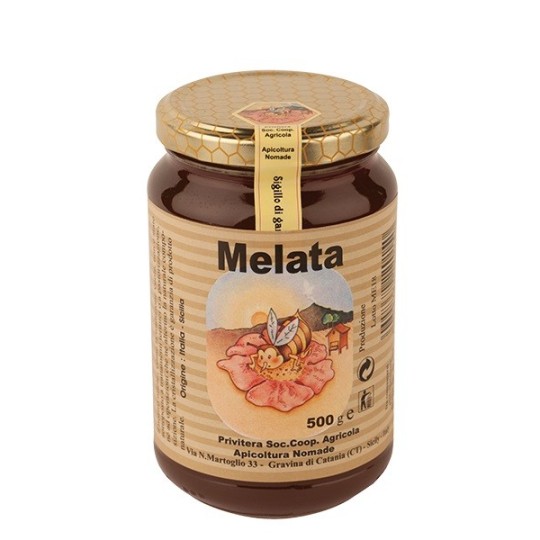

The Melata is produced by small insects that feed the sap of the trees and secrete the metelate, an element from the characteristic brown color rich in nutrients such as sugars and mineral salts.
For its numerous beneficial characteristics (antibacterial activity, antioxidant, prebiotic and high content of mineral salts), Melata honey can be recommended for daily use, such as sweetener just like honey to nectar.
Origin: Sicily
In environments with low availability of plants and nectariferous flowers the Beesets, ie the worker APIs employed to harvest, do not feed on the nectar of flowers but use the "metelate" to produce honey that takes the name of "Melata honey". In particular, the metelate is a viscous and sugary substance that forms on the trees. It is produced by small insects that feed the sap of the trees and secrete the metelate, an element with the characteristic brown color rich in nutrients such as sugars and mineral salts.
For its numerous beneficial characteristics (antibacterial activity, antioxidant, prebiotic and high content of mineral salts), Melata honey can be recommended for daily use, such as sweetener just like honey to nectar.
Origin: Sicily
Organoleptic aspects:
Color: Dark, Brown, Amber
Odor: characteristic of medium intensity
Taste: taste of caramel, cooked fruit and herbal syrup. In the mouth the taste is persistent and can also present a sour and salted note, of resin, of damp wood, incense
Consistency: very slow crystallization and a low water content, as the bees find the dummy on the leaves and, given that they collect it in the summer, the relative humidity of the environment is usually low and this also affects the final product
Storage: room temperature away from the sun
Sizes: 500g - 250g
Expiry date: two years from the date of production

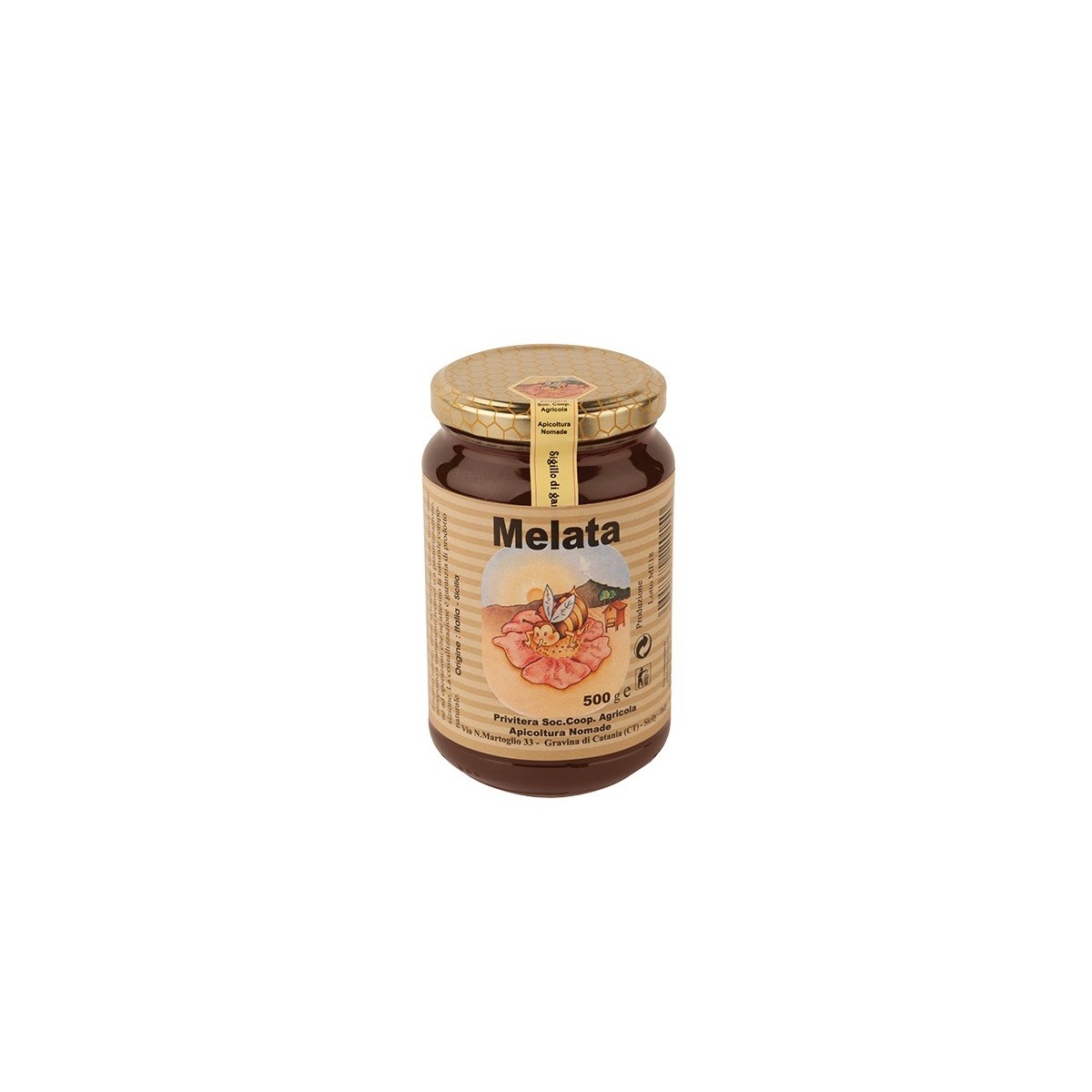
The Melata is produced by small insects that feed the sap of the trees and secrete the metelate, an element from the characteristic brown color rich in nutrients such as sugars and mineral salts.
For its numerous beneficial characteristics (antibacterial activity, antioxidant, prebiotic and high content of mineral salts), Melata honey can be recommended for daily use, such as sweetener just like honey to nectar.
Origin: Sicily